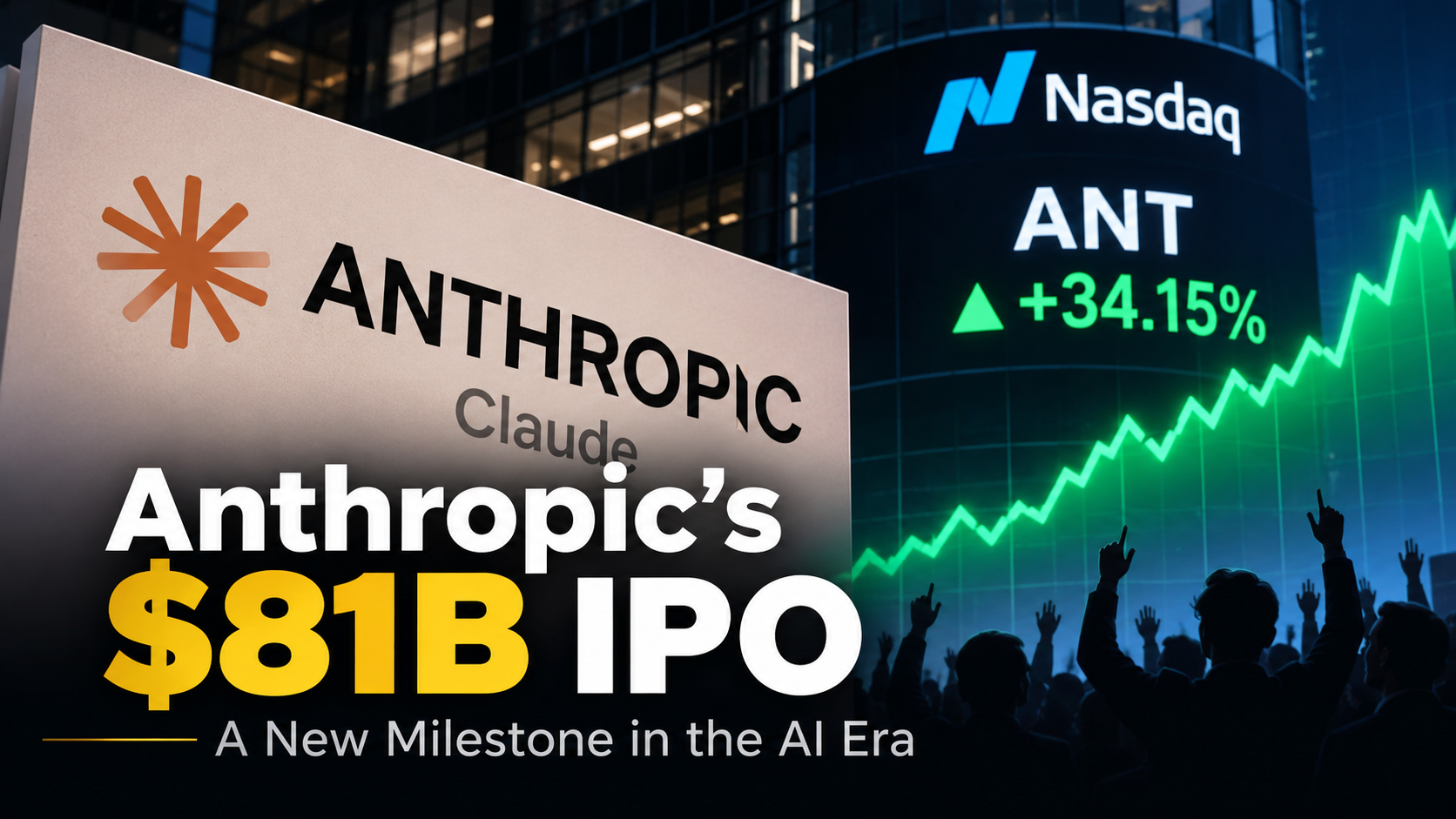
Anthropic, the company behind the AI chatbot Claude, has made history with one of the biggest stock market debuts ever recorded. On November 19, 2026, the artificial intelligence company began trading on the Nasdaq under the ticker symbol ANT, following an extraordinary $81.3 billion initial public offering (IPO).
The company priced its shares at $83, above its initially expected range of $70 to $78. This gave Anthropic an estimated valuation of approximately $1.5 trillion, making its IPO larger than SpaceX's previous record-breaking offering.
Investor interest was immediately visible when trading began. Anthropic shares opened at $111.50, representing a gain of more than 34% over the IPO price. At that level, the company's market value briefly crossed the $2 trillion mark. However, the initial excitement did not last long, as shares experienced selling pressure during the trading session.
The enormous valuation reflects growing confidence in the commercial potential of artificial intelligence. Founded in 2021 by Dario Amodei, Daniela Amodei and other former OpenAI researchers, Anthropic has become a major competitor in the AI industry through its Claude models and enterprise-focused products.
Its financial performance has also attracted attention. Anthropic reported approximately $33.24 billion in revenue for the first nine months of 2026, representing growth of around 1,200% compared with the same period last year. However, the company also reported substantial losses, highlighting the enormous financial demands of developing and operating advanced AI systems.
Beyond the financial numbers, Anthropic's public listing represents an important moment for the entire technology industry. Investors now have a direct way to measure the market value of an independent frontier AI company.
But a successful IPO does not guarantee long-term success. High computing costs, competition, regulatory pressure and questions about the sustainability of AI investment remain significant challenges.
Anthropic's debut has opened a new chapter in the relationship between artificial intelligence and global financial markets. The bigger question is whether the company can turn today's extraordinary investor expectations into sustainable business growth.